
It is six in the evening on the 5th of March, 2026.
Today I discovered that a series had changed without announcing itself.
For months I have been working inside what I came to call Atlas of Inner Blooming Biomes. One specimen after another emerged, each painting like a botanical discovery from some interior forest. They carried the same genetic code. They belonged to the same ecosystem of marks, gestures, and luminous tensions.
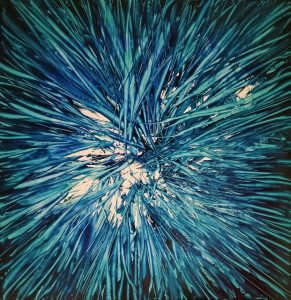
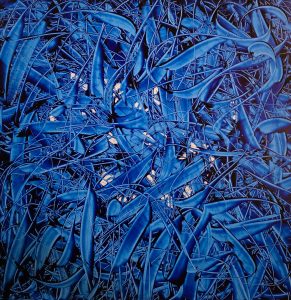
Above:
Left: Specimen 19, Luxcristala eruptura
Collected: 29 September 2025
Right: Specimen 22, Noetiphyllum implicata
Collected: 4 March 2026
Yesterday, Specimen 22 arrived.
Today I sat down to paint 23, assuming I was continuing the same lineage.
But the painting had other intentions.
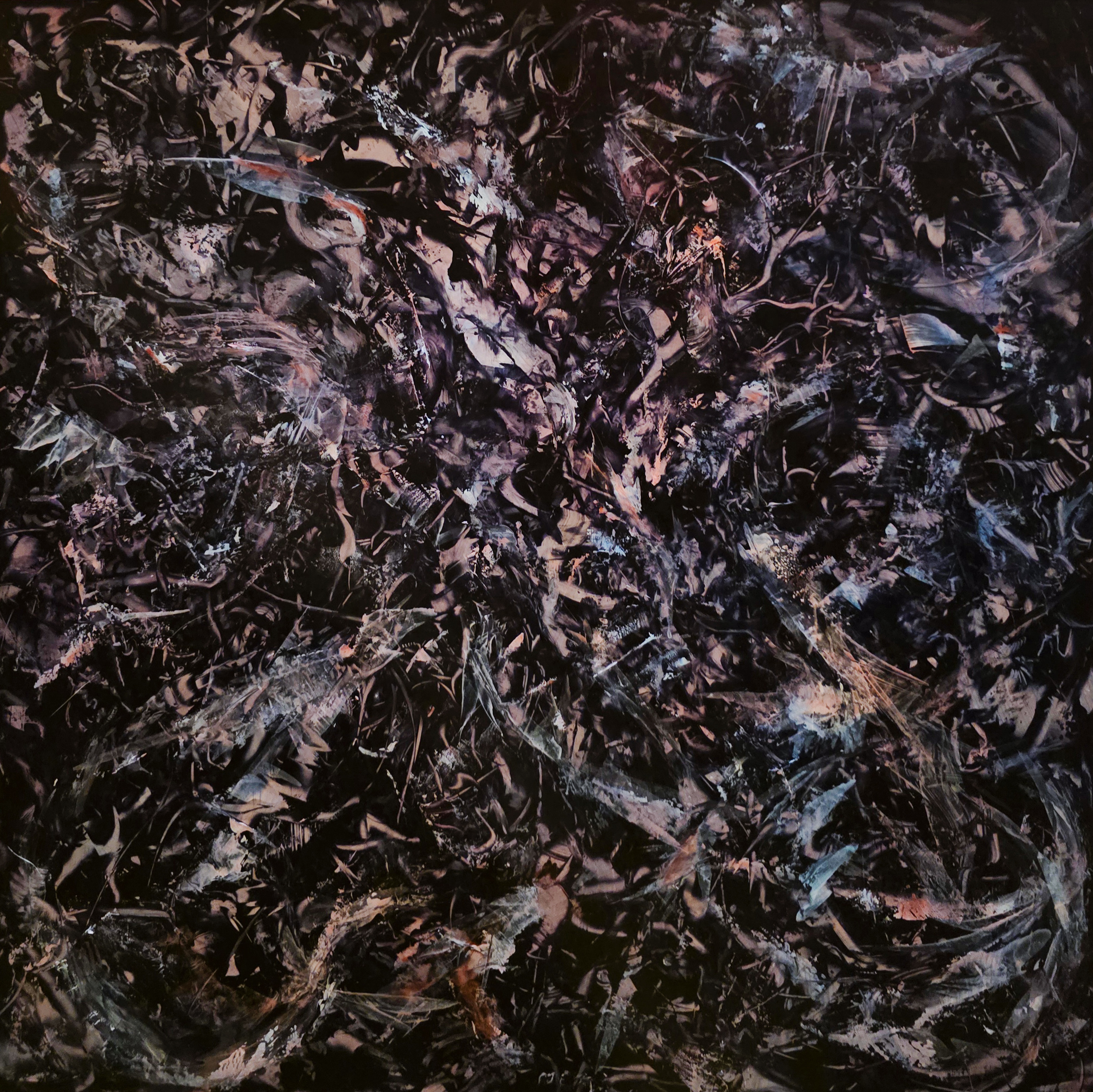
Very quickly it became clear that the organism appearing did not belong comfortably within the same taxonomy. The structure was different. The forces organizing it were different. The energy was of another order entirely. If I were to think like a botanist, I would say it was not another species within the same genus.
At first, I believed I had reached the edge of the series.
That is the strange moment in painting. The hand crosses a threshold before the mind understands what has happened. Only afterwards do you realize that something has shifted beneath the work.
For a brief moment I thought Atlas of Inner Blooming Biomes had concluded. Twenty-two specimens gathered from a terrain that opened inside the studio and revealed itself one painting at a time.
But today I realized something else.
A new organism appearing does not mean the forest behind it has died.
The threshold painting was not an ending. It was an opening.
The forces that generated the Atlas of Inner Blooming Biomes are still alive. They are still moving through my hands. That ecology has not been exhausted. What appeared instead was another path through the same terrain.
The threshold painting did not close a door. It revealed another corridor.
Series in art are rarely linear. They branch like roots underground or rivers dividing across a delta. One current continues while another begins, both drawing from the same unseen aquifer.
And perhaps that is why the new painting felt so different. It behaved less like a specimen and more like a field of forces. The circular movements, the turbulence, the darker atmospheric pressure within the work all suggested another energetic structure emerging through the same ecosystem. Not separate from the Atlas, but moving alongside it.
At the same time, the world beyond the studio was filled with conflict, uncertainty, and grief. My homeland of Iran had entered another moment of war and upheaval. Looking back at the painting now, I cannot help but feel that some of those pressures moved silently through the work as it was being made.
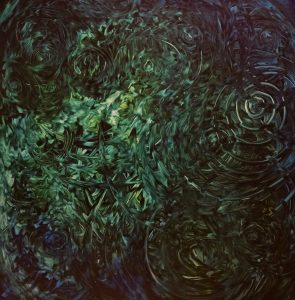
Artists often absorb atmospheres before they consciously understand them. The studio becomes a kind of seismograph for invisible tensions moving through the world and through the body.
Perhaps that is what appeared in the threshold painting: not a departure from the inner biome, but a deeper encounter with the unstable forces that move through all living systems.
This is the strange generosity of painting.
It does not obey the tidy logic of beginnings and endings.
Sometimes a series closes.
Sometimes it branches.
Sometimes another current suddenly appears beneath the surface.
And sometimes it is all of it, all over, all at once.
Tonight I am no longer standing at the end of a forest. I am standing where the forest begins to divide.
5th March 2026